


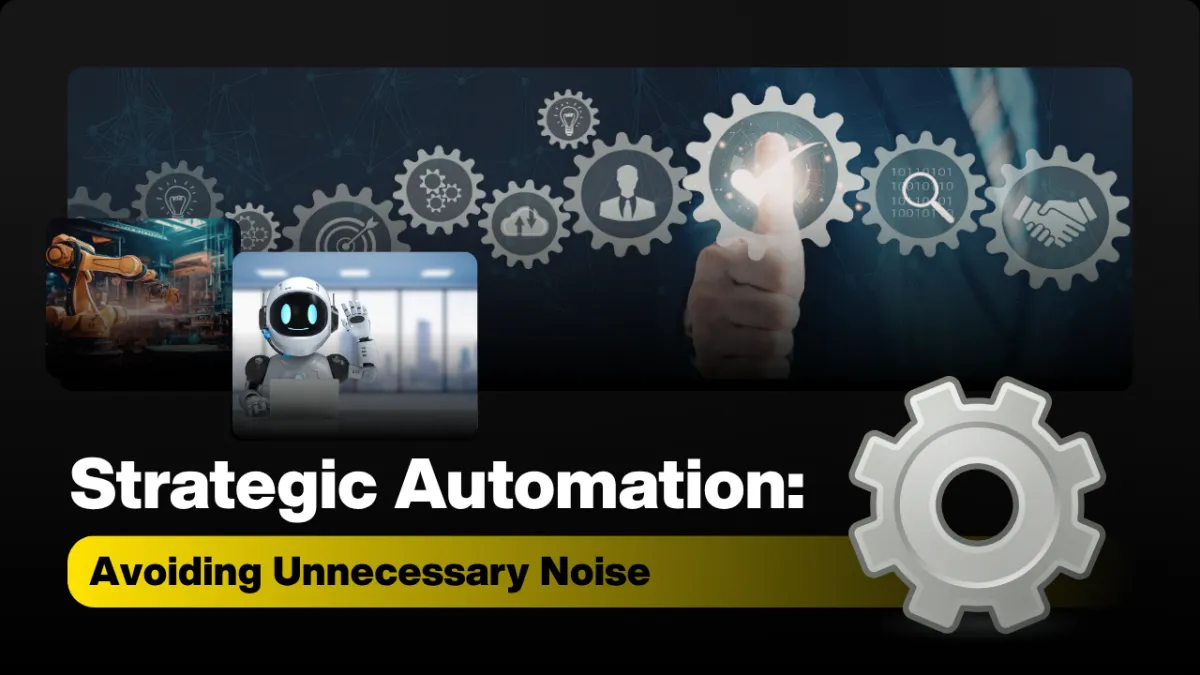
Strategic Automation: Avoiding Unnecessary Noise
Not Every Automation Needs to Exist
Building automations inside GoHighLevel (GHL) can feel like progress. But without clear marketing direction, you’re not building a system—you’re building noise. This article continues the conversation from Effective Paid Ads with Optimized Lead Systems and makes one thing clear: strategy decides what deserves to be automated. And at Insert Fuel, this is exactly how we build: strategy first, then only the automations that actually earn their place.
📌 Key Context: In the previous article, we focused on how effective paid ads only work when they plug into an Optimized Lead System—a clear, intentional path from click to conversion.
Why Beginners Overbuild Inside GHL
When people first log into GHL, they see endless options—workflows, triggers, tags, pipelines, calendars, SMS, emails. It’s tempting to use everything at once.
Feature FOMO: If the platform offers it, they feel they must use it.
Busy ≠ Effective: Building complex workflows feels productive, even if no leads are converting.
No strategic filter: There’s no clear rule for what belongs in the system and what doesn’t.
The result? Dozens of workflows firing at once, leads getting conflicting messages, and owners blaming “the tech” instead of the lack of direction behind it.
💡 Pro Tip: If you read the Effective Paid Ads with Optimized Lead Systems article, think of GHL as the “engine room” of that same system. Overbuilding here is like bolting random parts onto an engine—more metal, worse performance.
Useful vs Unnecessary Automations
Not all automations are created equal. Some protect your time and improve the customer experience. Others just add friction and noise.
Useful automations usually:
Support a clear marketing goal (book calls, qualify leads, close deals).
Replace repetitive, low-value tasks your team does over and over.
Make the next step obvious for the lead, not just for you.
Unnecessary automations usually:
Exist “because we can,” not because they move revenue or relationships forward.
Add steps, tags, and conditions that no one on the team can explain.
Trigger multiple messages that say the same thing in slightly different ways.
📌 Key Takeaway: If you can’t clearly say what an automation does, who it serves, and how it supports revenue, it probably shouldn’t exist.
In your previous Optimized Lead System, ads brought the right people in. Here, useful automations are what shepherd those people through the journey without confusing or overwhelming them.
The Risk of Generic, “One-Size-Fits-All” Follow-Ups
Many GHL accounts are filled with generic follow-up sequences copied from templates or YouTube tutorials. They look impressive, but they ignore context.
A cold lead gets the same tone as a warm referral.
A high-intent booking gets the same “are you still interested?” messages as a freebie opt-in.
Everyone is treated like a number, so responses drop and unsubscribes climb.
Over time, this trains your audience to ignore you. The automation didn’t fail because it was “too short” or “too long.” It failed because it wasn’t built around real human intent.
💡 Pro Tip: In the paid ads article, you optimized who you attract. Here, optimize how you treat them once they’re inside your Optimized Lead System—cold, warm, and hot leads should never experience the same follow-up.
How Customer Journey Clarity Simplifies Automation
Before touching GHL, map the journey on paper or a whiteboard. Ask:
Where does the lead come from? (Paid ad, referral, organic content?)
What do they want right now? (Info, pricing, call, demo?)
What is the single next step we want them to take?
When the journey is clear, the automation gets simple:
One entry point per intent (e.g., booked call, lead magnet, webinar).
One focused sequence that moves them to the next logical step.
Minimal branching, just enough to respect behavior (showed up, no-show, clicked, didn’t click).
💡 Pro Tip: If your journey diagram looks cleaner than your workflow screen, you’re on the right track. GHL should reflect the journey, not complicate it.
This is the same journey you outlined when designing your Optimized Lead System for paid ads—now you’re simply translating that clarity into precise, minimal automations.
Build Workflows Based on Intent, Not Features
The most effective systems start with one question: What is the lead trying to do? Features come second.
Examples of intent-based workflows:
“Book a call” intent: Short confirmation sequence, reminders, and a post-call path based on show/no-show.
“Learn more” intent: Education-focused emails that answer key objections and invite a next step when ready.
“Claim an offer” intent: Clear deadline, social proof, and strong call to action—no fluff.
Notice what’s missing: “use every trigger,” “tag everything,” or “add five more emails just in case.” The features are tools, not the strategy.
📌 Key Takeaway: In your paid ads framework, intent started at the ad level (what they clicked on). Here, intent continues inside GHL—each workflow should feel like the natural extension of the promise that ad made.
When to Keep Things Manual vs Automated
Not everything should be automated. In fact, some of the highest-converting moments are better handled by a human.
Keep it automated when:
The task is repetitive and rule-based (reminders, confirmations, basic follow-ups).
The volume is high, but the message doesn’t need deep personalization.
Speed matters more than nuance (instant replies, form responses).
Keep it manual when:
A lead is highly qualified and close to buying—human judgment matters here.
The deal size is large enough that a personal Loom, DM, or call is worth it.
You need context, nuance, or negotiation—not canned responses.
📌 Key Takeaway: Automate the predictable. Show up personally for the pivotal.
💡 Bridge Back to Your Ads: Your paid ads create opportunities. Your Optimized Lead System—powered by smart GHL automations and timely human touch—turns those opportunities into revenue. Both articles are two halves of the same pipeline.
Clarity Over Complexity: Your Real Advantage
The real thought shift is this:
More automation does not mean a better system.
Better thinking creates better automation.
Start with the offer, the journey, and the intent.
Only then decide what deserves to be automated inside GHL.
Remove anything that doesn’t clearly support revenue, relationships, or clarity.
When you lead with strategy, your systems stop trying to impress—and start performing. Not every automation needs to exist. The ones that do should earn their place.
📌 Next Step: If you’ve already dialed in your Effective Paid Ads with Optimized Lead Systems, use this article as your implementation checklist inside GHL. One strategy, two views: the traffic side and the automation side—working together as a single, coherent system.